AI Exchange recap

AI Exchange @ Coralogix

9 July 2026LondonCoralogix|WeBuild-AI|Cato Networks

A huge thank you to everyone who made it to Coralogix on 9 July, despite the travel chaos and the extreme heat across London. The air-con saved the day, and we settled in for three talks from Coralogix, WeBuild-AI and Cato Networks.

From bringing visibility to coding agents, to handing real development work to an agent and letting it loop until the quality gates pass, to uncovering the security risk buried in policies nobody has looked at in years — the evening covered how AI is solving real engineering problems across software development, cybersecurity and infrastructure.

A special thank you to our speakers, and to Coralogix for hosting us through a heatwave.

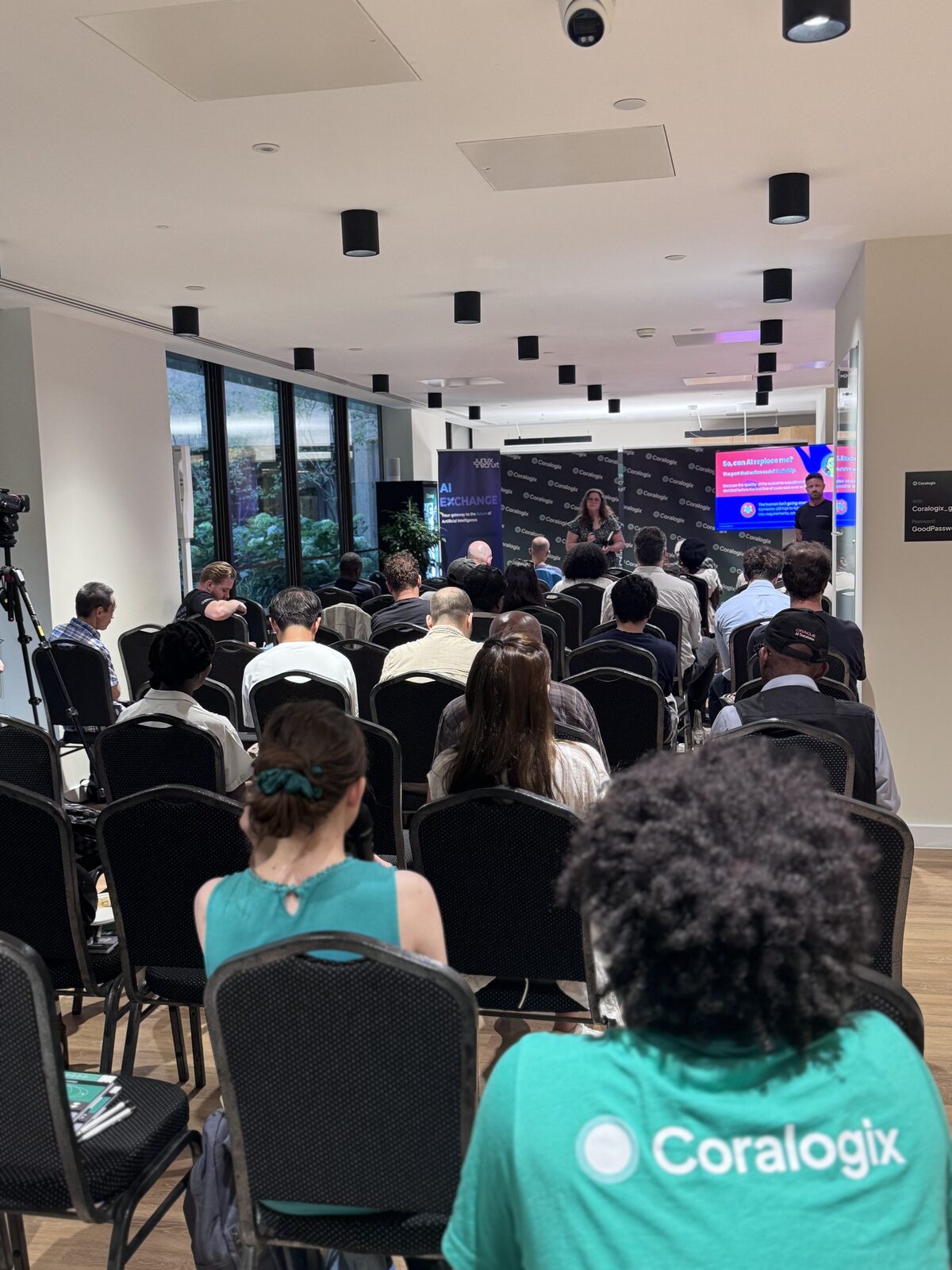
A full room at AI Exchange @ Coralogix, the audience seated in rows facing a speaker and a projected slide.

The talks

01|Lewis Isaac — Coralogix

Who’s watching the agents?

Lewis looked at the evolving role of AI powered code agents in software development workflows, and made the case for observing and managing them with the same precision we already apply to human developers.

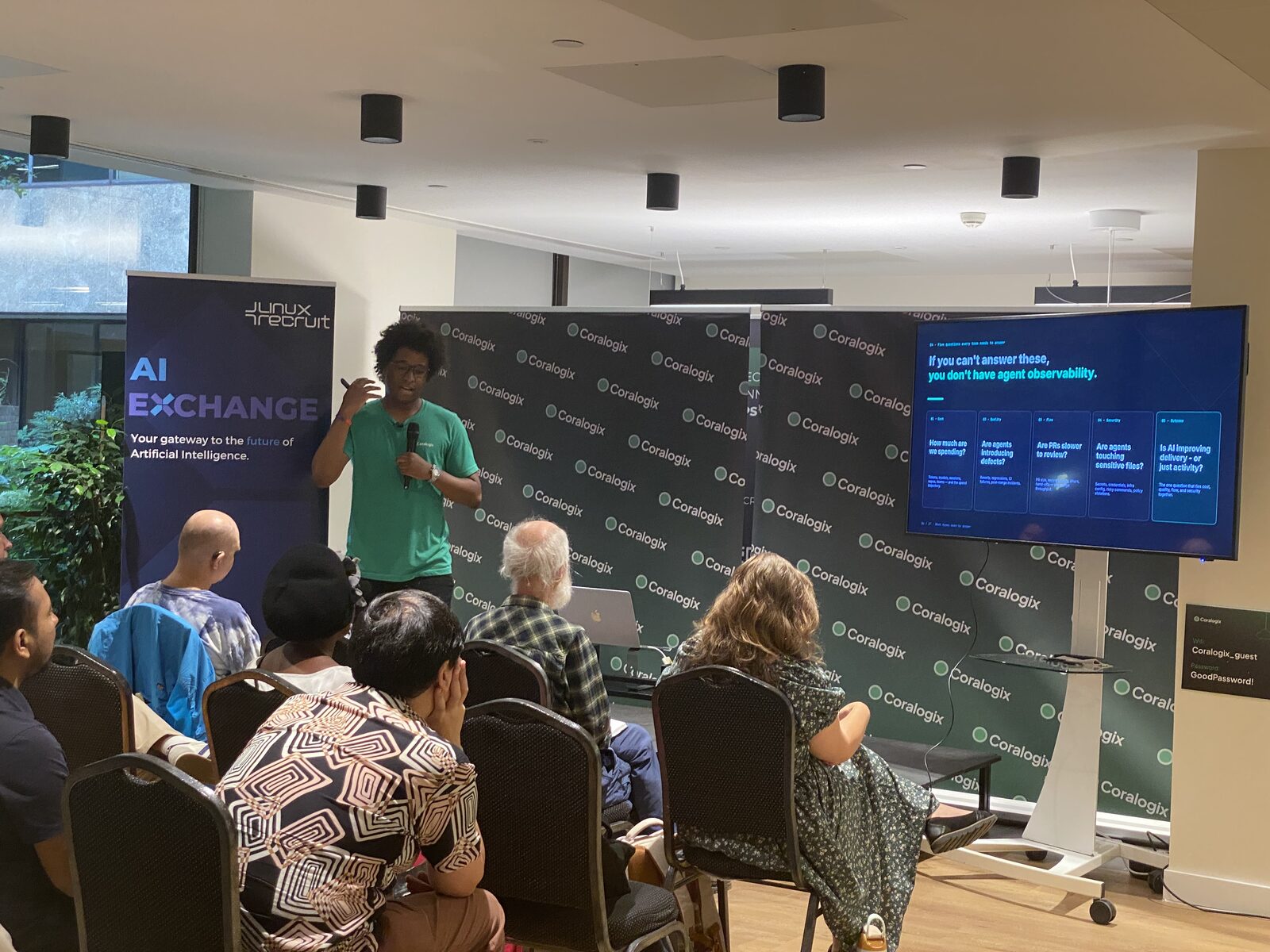
His framing was a set of questions a team simply cannot answer without agent observability: what are we spending, are agents introducing defects, are PRs getting slower to review, are agents touching sensitive files. OpenTelemetry and Coralogix’s own platform were the tooling, but the point was the discipline — effective, secure and cost-efficient code delivery.
Watch on YouTube

02|Elena Vilimaite — WeBuild-AI

Cutting code AFK with the Ralph Wiggum loop

Elena — who stepped in at the last minute, again — talked through handing real development tasks to an AI agent running what she calls the Ralph Wiggum loop, after the Simpsons character: automate the implementation, then iterate until every quality gate passes.

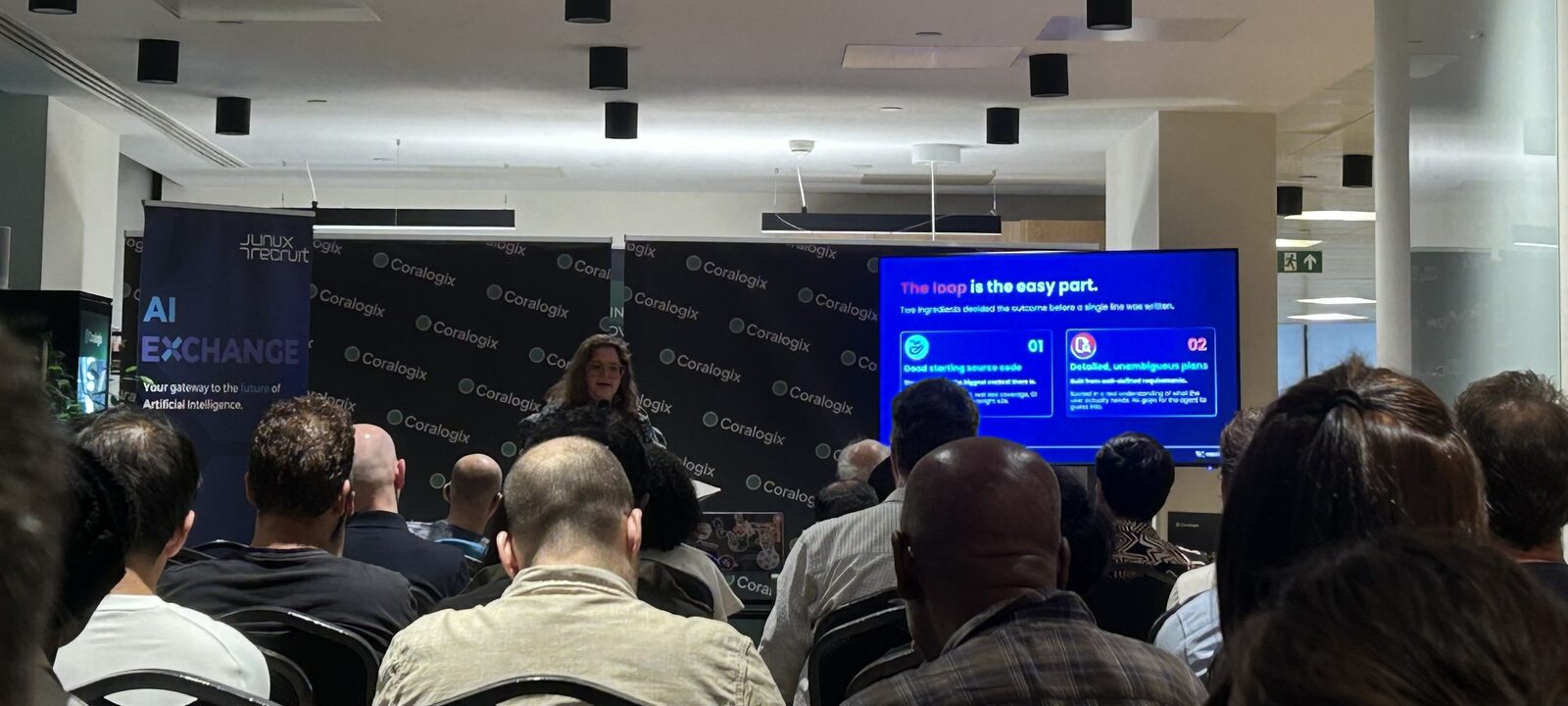
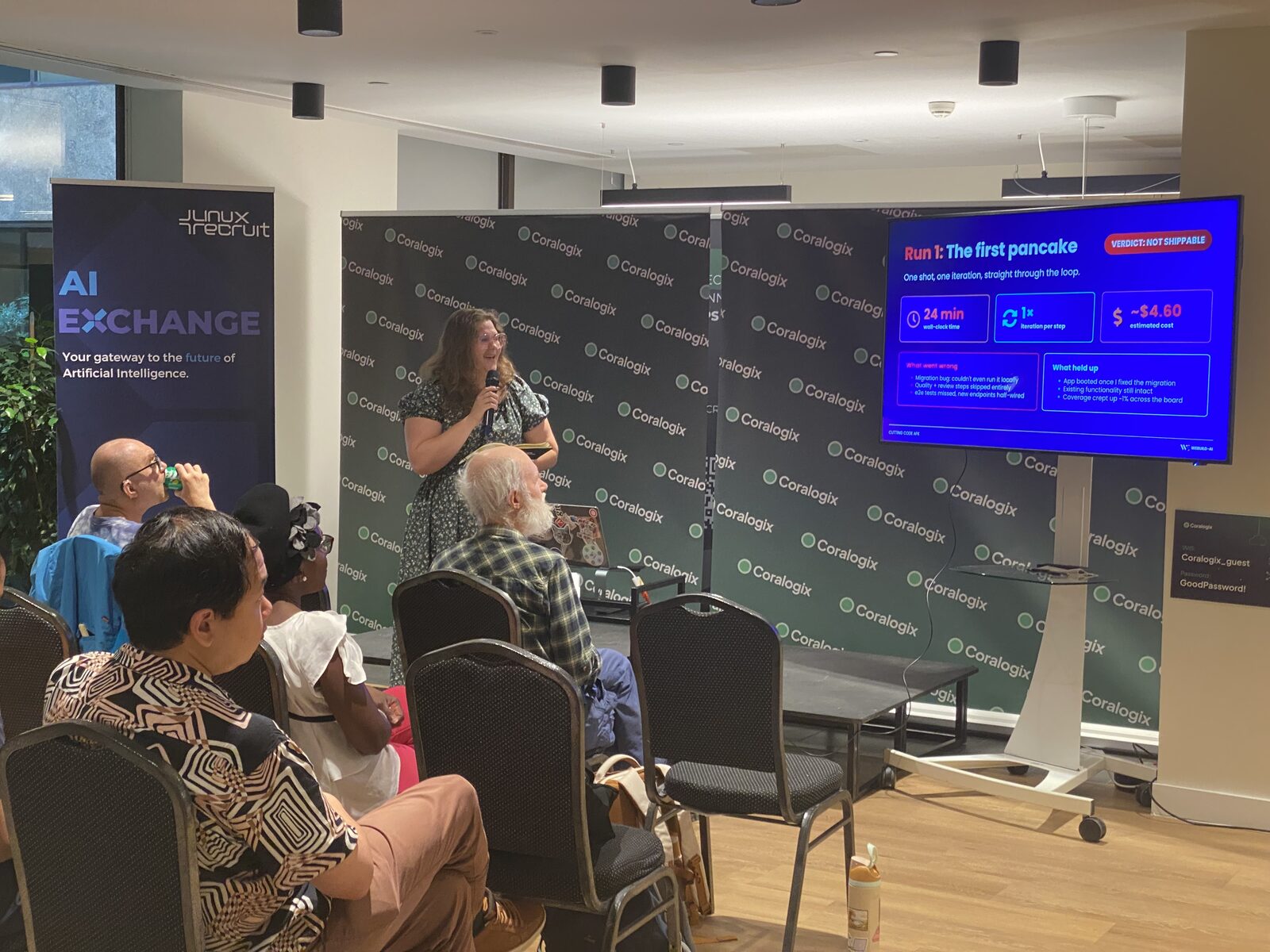
She was candid about the runs that did not work. The first pass took 24 minutes and about $4.60 and came back “not shippable”: a migration bug, the quality and review steps skipped entirely, e2e tests missed. Her conclusion was that the loop is the easy part — good starting source code and detailed, unambiguous plans decide the outcome before a single line is written.

Watch on YouTube

03|Avidan Avraham — Cato Networks

Using LLMs to sweep up misconfigs

Avidan introduced the idea of a contextual agentic garbage collector: an AI-driven system that finds and clears out misconfigured security policies — the temporary rule, the testing rule, the one that expired two years ago — before an attacker finds them first.

The appeal is that this is work nobody ever gets round to. Policy sets grow for years, no one is quite sure which rules are still load-bearing, and the risk compounds quietly. An agent with enough context to judge a rule’s intent can do the sweeping.

Watch on YouTube

Thank you again to everyone who joined us, to our speakers, and to Coralogix for hosting through the heatwave. We were back three weeks later on 30 July, hosted by Tessl — and AI Exchange runs regularly in London, with the next date going up on Meetup as soon as it is confirmed.

Tony, Leah and the AI Exchange team

From the night

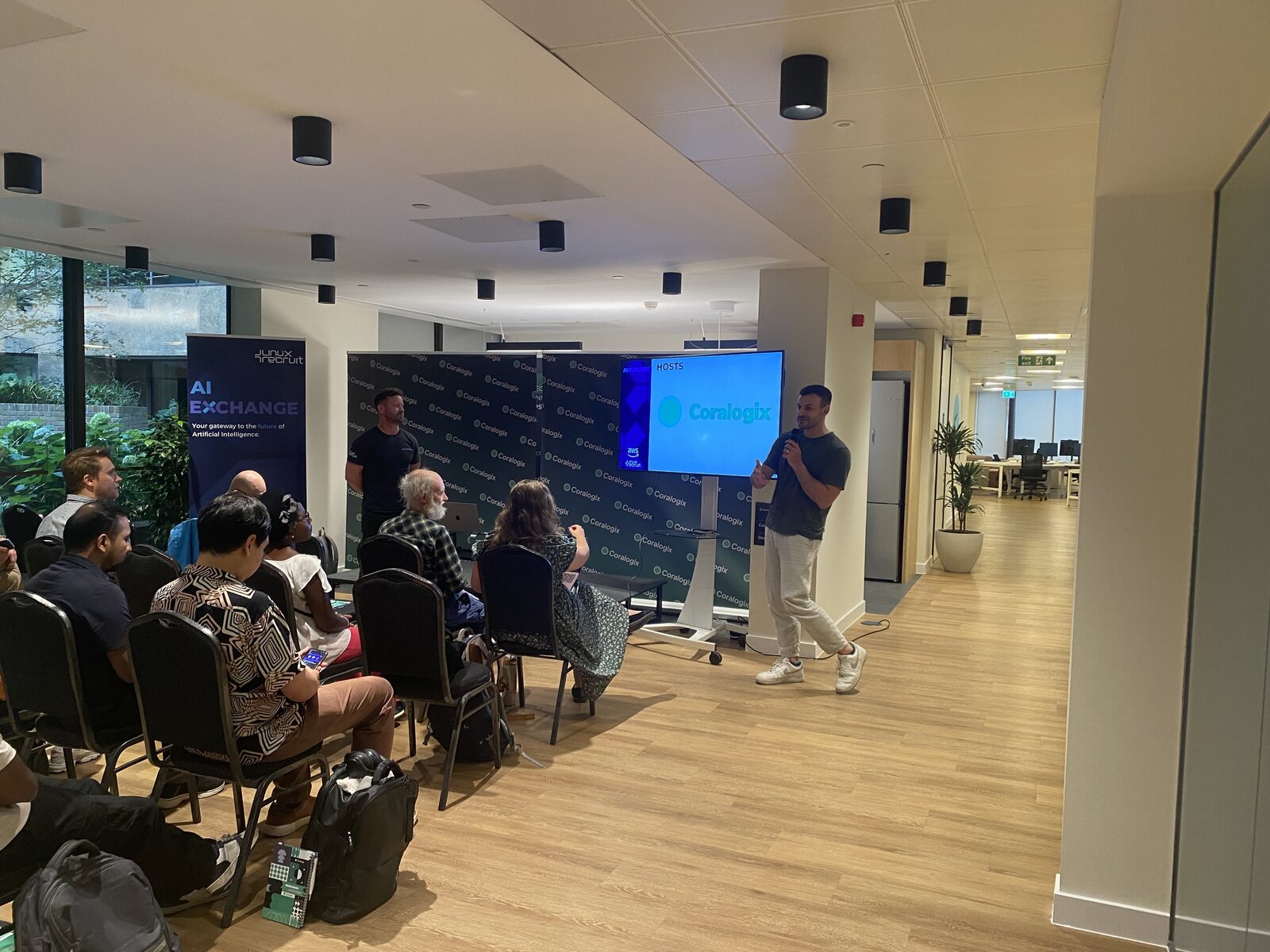
A host with a microphone opening the evening beside a screen reading “Hosts — Coralogix”, the AI Exchange banner to one side and the audience seated in rows.
A speaker mid-talk beside a slide reading “If you can’t answer these, you don’t have agent observability”, listing five questions on cost, quality, flow, security and outcome.
A speaker beside a slide headed “Run 1: The first pancake”, marked “verdict: not shippable”, showing 24 minutes of wall-clock time and an estimated cost of $4.60.
A wide view from the back of a full room, a speaker at the front beside a slide reading “The loop is the easy part”.
The audience seen from the back of the room, rows of seated attendees facing a speaker and a slide asking “So, can AI replace me?”.

Originally written up by Linux Recruit.